
The Woman with my Face
Part II
“Wow. So, at thirty years old, I finally get to meet my mother.”
The thought was so surreal that I kept turning it over and over in my mind, as though it were a mystical chant that might somehow unlock a hidden portal. Then, perhaps, it would all begin to make sense.
Only a week earlier, I hadn’t even known this woman existed. Now, there I was, driving to meet my mother for the first time. In a strange twist of fate, she had been living less than twenty miles away.
What will I say? How will I react?
I was terrified that I would be instantly triggered into a fit of rage I wouldn’t be able to control. Or worse, what if I broke down in tears? I absolutely hated crying in front of people.
We had arranged to meet at the small restaurant she owned, where she served Japanese takeout. As I closed my car door, I noticed a woman walking toward me.
It was her.
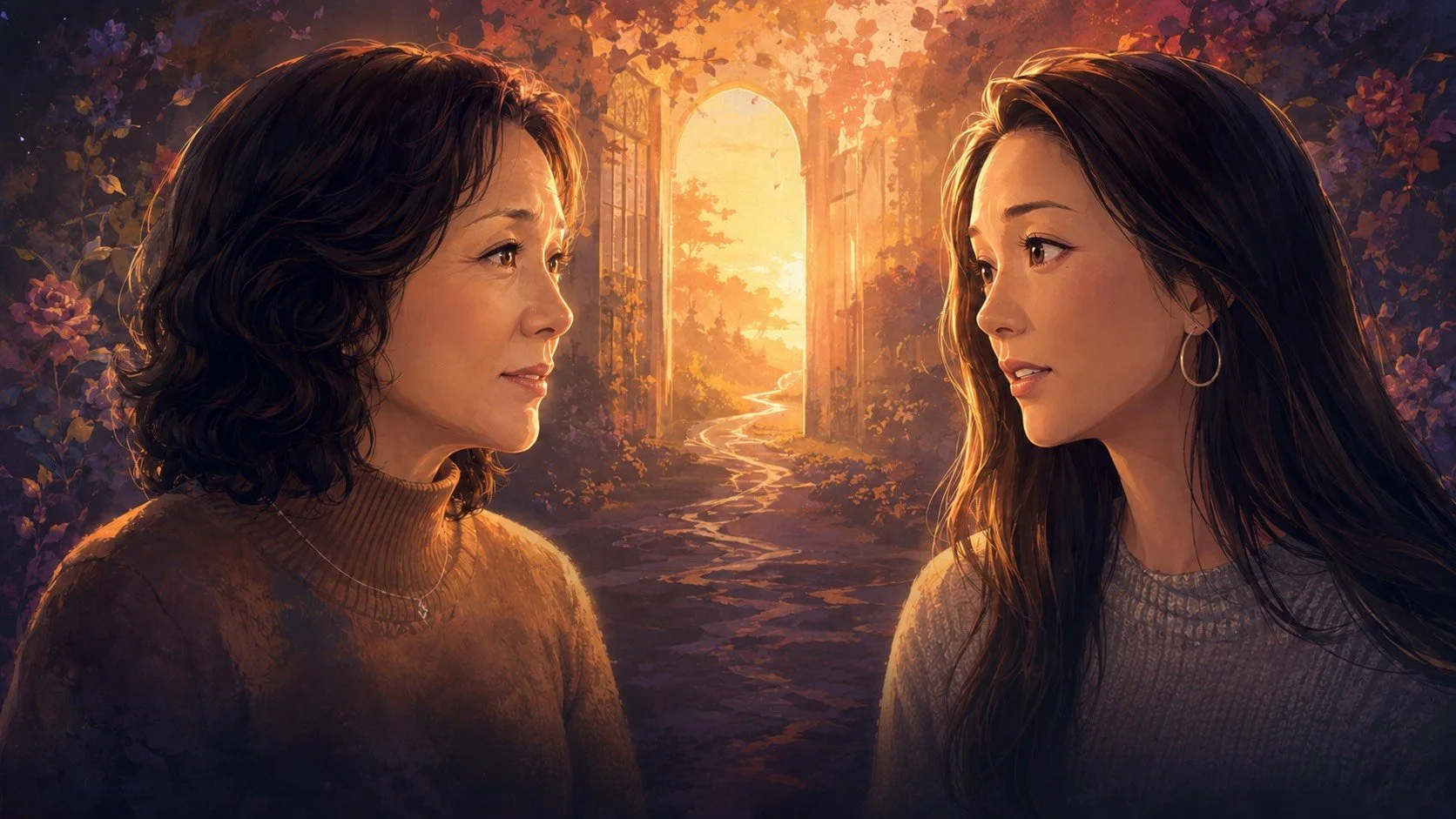
There was no denying it. I didn’t recognize her—I had never met her before—but somehow, I knew it was her. She had my face.
It wasn’t a striking resemblance, but that silhouette was unmistakably the one that had always been missing from my childhood.
Growing up, I lived with the heavy ache of never quite belonging in my family. I was a sensitive, brooding loner who mostly kept to herself but had a mean streak if ever crossed. My face naturally carried a somber expression.
My sister, on the other hand, was bubbly, sweet, and cute—and, in many ways, the bane of my childhood existence. Wherever we went, people would stop to admire her. And they would remark on how beautiful she was and how much she looked just like our mother.
Because she did.
My sister would effortlessly make people laugh with her natural playfulness, while I would sit silently among them, wanting nothing more than to escape the feeling of being invisible.
The worst moments were those when one of our mother’s friends would remark on how little I resembled the rest of the family—and how funny that was. I heard this comment often because it was true. I didn’t look like any of them. And each time this observation was made, it felt like confirmation for the alienation I already carried.
I was an orphan within my own family.
I would often study our family photographs, tracing the round, cherubic faces of everyone around me before arriving at my own—all angles and sharp edges.
And I hated my face.
My long, ugly, despicable face.
To me, it was a constant reminder that I did not belong.
So when I saw my mother that day in the parking lot of that shabby plaza in Downey, California, I felt something strange—something new, yet deeply familiar.
She had tears in her eyes, and she reached for me without hesitation.
I startled slightly as her hands caressed my face, my arms, and my hands. She gazed deeply into my eyes as apologies poured without cessation from her lips.
I had never been touched like that in all my life.
In an instant, I understood: this was the unmistakable touch of a mother.
And here I was, at the ripe old age of thirty, finally getting to experience it.
After sharing a meal at the restaurant, we said our goodbyes.
I wish I could say that we bonded instantly—that meeting her miraculously healed the deep wounds of abandonment I had carried throughout my life. But healing of that kind requires patience and time.
This was only the beginning of a new story. The story of a mother and her long-lost daughter—or, perhaps, the story of a daughter and her long-lost mother.
Either way, something had begun to heal across the rift of time.
For both of us, a crucial piece of the puzzle had finally fallen into place, allowing a larger picture to gradually emerge.
